What makes a good pilot candidate
A good candidate is a live or near-live AI workflow where the buyer can point to a specific control gap: decision authority, data boundary, policy binding, or weak accountability after the fact.
A useful pilot starts with one live workflow and one concrete control problem. The goal is to determine whether that workflow can be brought under clearer control with a narrow scope, reviewable decisions, and useful outputs.
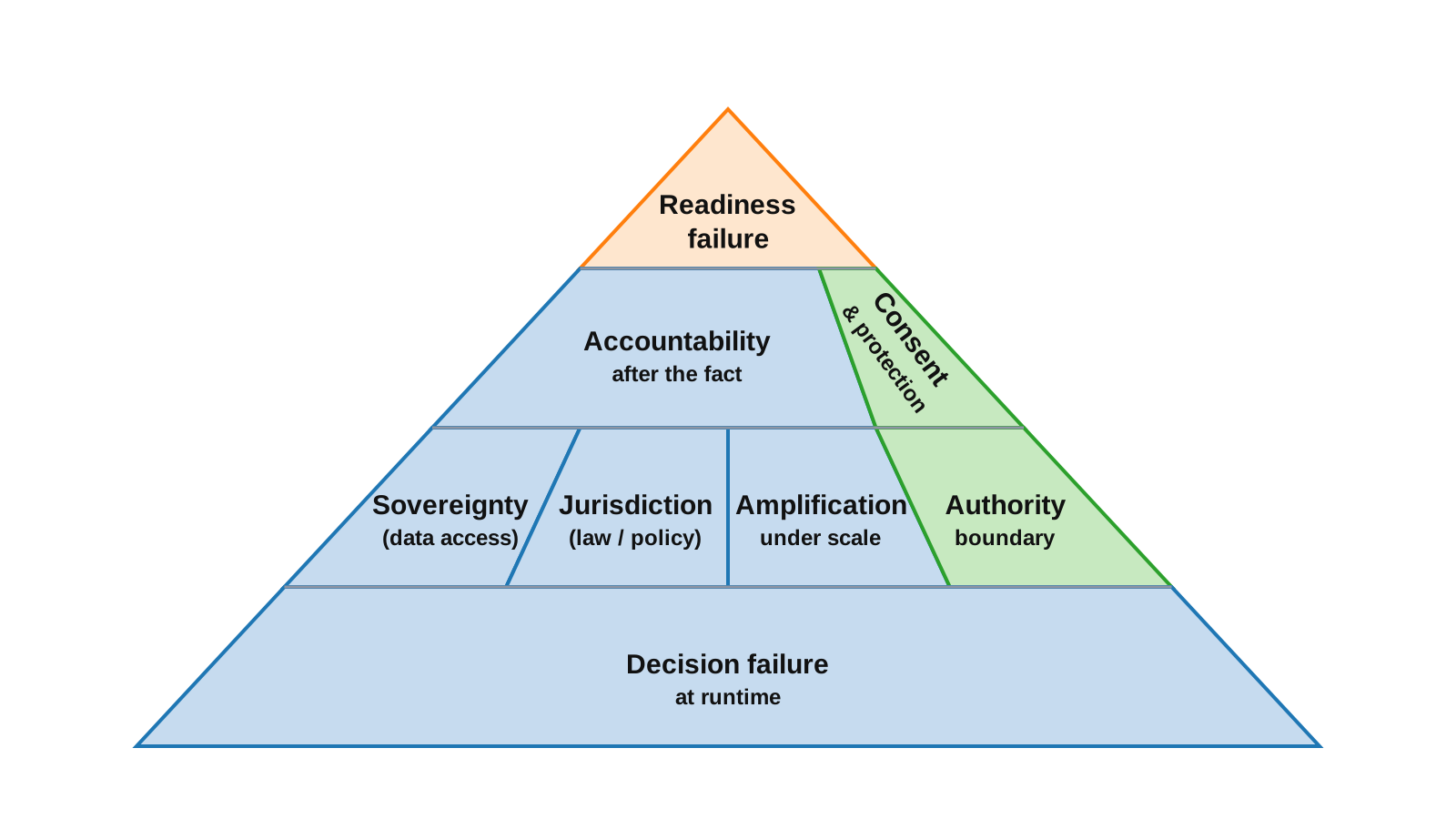
The pilot does not need to solve the whole pyramid. It needs to identify where your target workflow is failing now and whether that problem can be reduced by a narrow, practical control approach.
A good candidate is a live or near-live AI workflow where the buyer can point to a specific control gap: decision authority, data boundary, policy binding, or weak accountability after the fact.
SFCL defines the runtime discipline. GEN-FIT expresses that discipline in a reviewable form that can be mapped and tested in a narrower pilot.
The immediate question is whether one workflow can be made governable enough to justify a broader control path, not whether every governance issue in the organization can be solved at once.
The buyers who usually move on this already feel the cost of inconsistency and drift. They are accountable to governance, audit, privacy, or deployment decisions and need a narrower path than a full governance program.
A short note about the workflow, the problem you are seeing, and the decision in front of you is enough to decide whether the pilot should be scoped.